Spatial exploration / 2024
The Cozy
Balcony
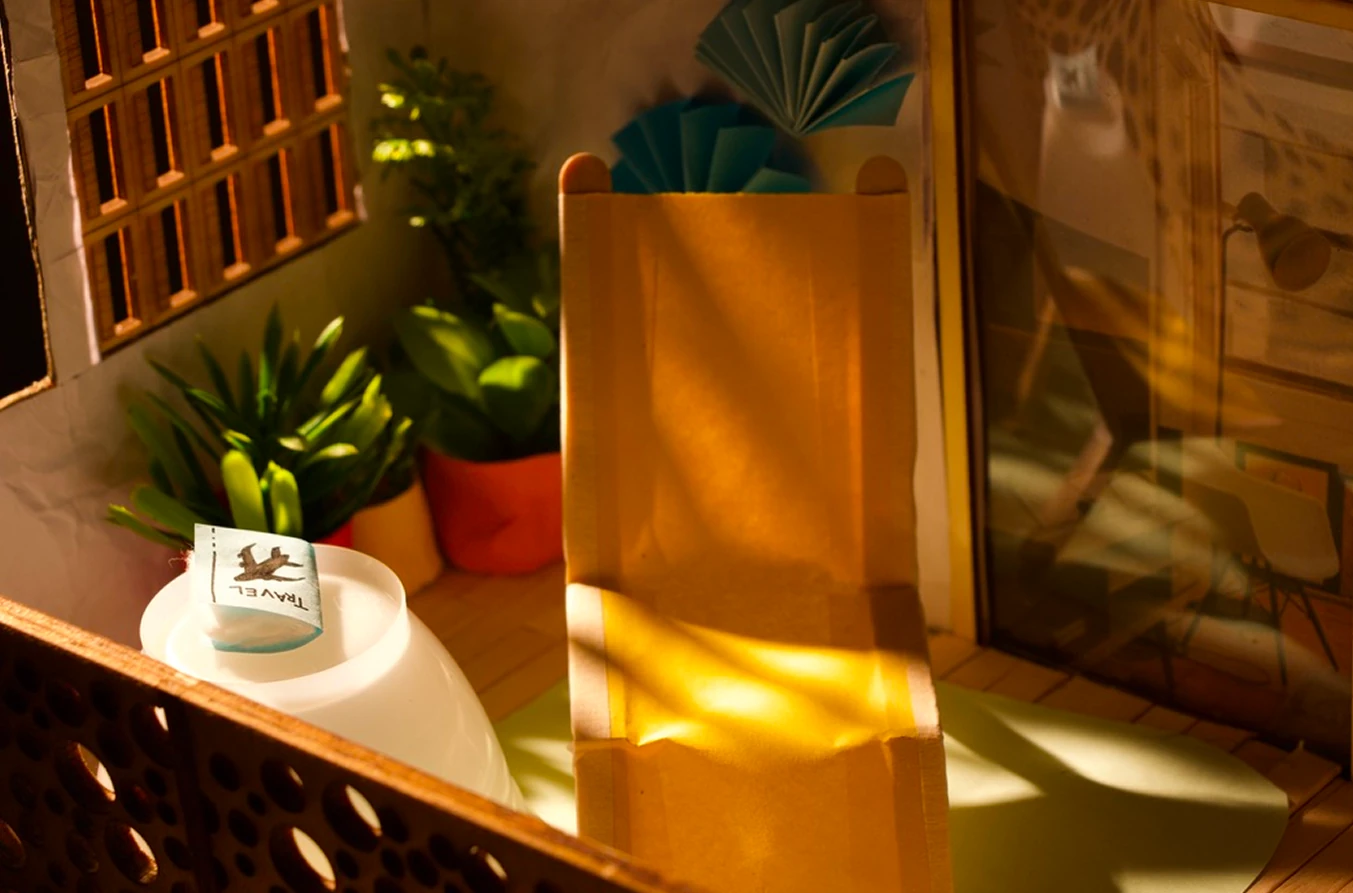
An atmospheric model exploring how material, light and shadow can recreate the feeling of comfort within an everyday balcony.
Scroll to read01 Introduction
A quieter corner at home.
The Cozy Balcony is an atmospheric model exploring how the feeling of comfort could be translated from a real place into a physical miniature.
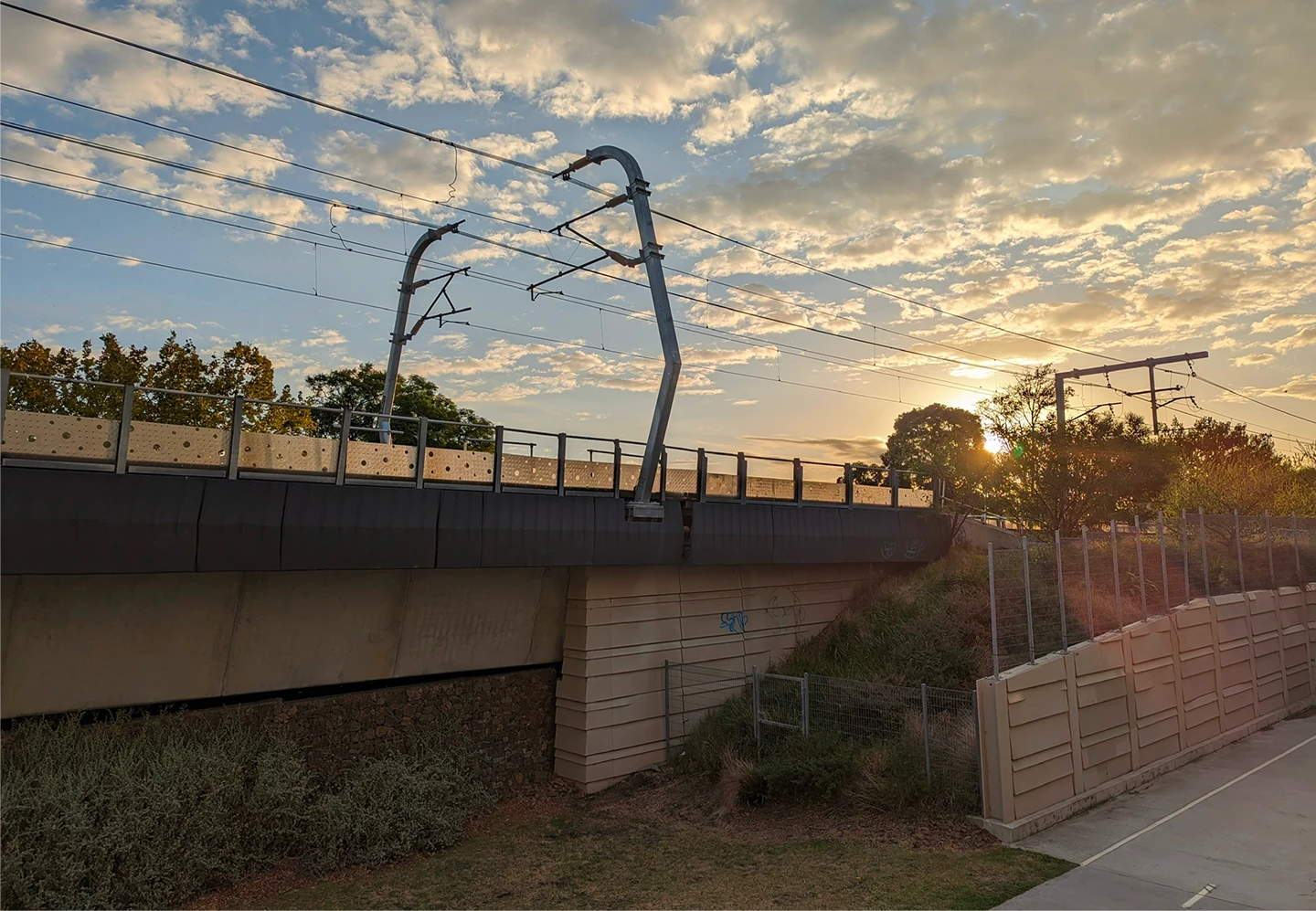
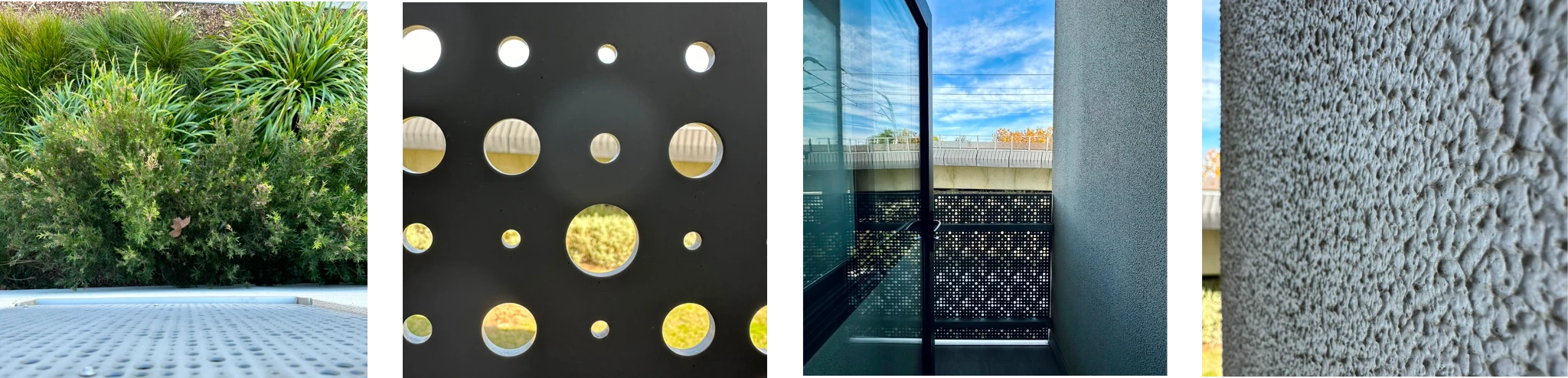
The project began with my own balcony: a small space for slowing down, getting fresh air and recovering after long periods of study. I explored the details that contributed to that experience—warm light, vegetation, timber surfaces, enclosure, texture and shadow.
Through photography, material studies and iterative model-making, the final maquette became an interpretation of those qualities rather than an exact replica of the original space.
- Context
- University project · DSG1000 Atmospheric Project
- My role
- Research, site observation, photography, visual analysis, concept development, model making, prototyping, laser cutting and final art direction.
- Disciplines
- Spatial exploration / Model making / Visual communication
- Status
- Completed · Individual project
02 The starting point
Rethinking a familiar space.
I started this project by questioning: How exactly can the atmosphere of a familiar place be communicated through a physical model?
I initially considered a park for its peaceful, natural qualities, but chose my apartment balcony. Its accessibility allowed me to return repeatedly and observe textures, vegetation, patterns, surrounding movement and changing light.
With a small and relatively simple space, the challenge was to identify what actually made it feel comfortable.
03 Exploring and making
Thinking through making.
Early graphic studies explored composition, colour, texture and pattern. Laser-cut experiments then revealed how filtered light and shadow could shape the atmosphere of the final model.
Quick maquettes tested furniture, planting, flooring and lighting. Popsicle sticks suggested timber decking; found materials represented plants and furniture. An early umbrella and chair felt too crude, and the model appeared overly box-like.
Later iterations introduced more precise components, balcony railings and laser-cut elements. Changing camera angles and lighting helped me understand how the model could communicate through photography as well as physical form.
04 The outcome
An atmosphere,
not a replica.
The final model combines warmth, vegetation and filtered light in a stylised balcony environment.
Timber surfaces, greenery and a lounge chair suggest a small place to retreat, while patterned elements create changing shadows.
Lighting helps define material, depth and atmosphere, altering how the model feels under warm, cool or coloured conditions. Framing, shadow and depth of field became part of the design, making the miniature environment feel more immersive.
Image sequence
A change in the time of day can quietly transform the atmosphere of a space. The same scene, captured with different light.
05 Looking back
Learning to build before everything is resolved.
This was one of my earliest experiences using physical model-making as a way of thinking. Imperfect prototypes taught me that atmosphere depends on the relationship between material, proportion, colour, light and framing.
I learned to build quickly, recognise what was unsuccessful and use those observations to inform the next version. I would now develop the architectural detailing and material fidelity further, but the project established an interest that continues through my work: how physical objects and environments can influence the way a person feels.
Continue exploring